If Walls Could Talk
In 2017, I undertook a renovation I had waited twenty years for. A full gut and rebuild of the top floor of our home to finally create a master bedroom suite with an ensuite bathroom and a walk-in closet that was mine alone. It was a dream project, but also a disruptive one. For thirteen weeks, we lived in the basement guest room while half the roof was removed, walls were stripped to studs, and the house existed in a constant state of controlled chaos.
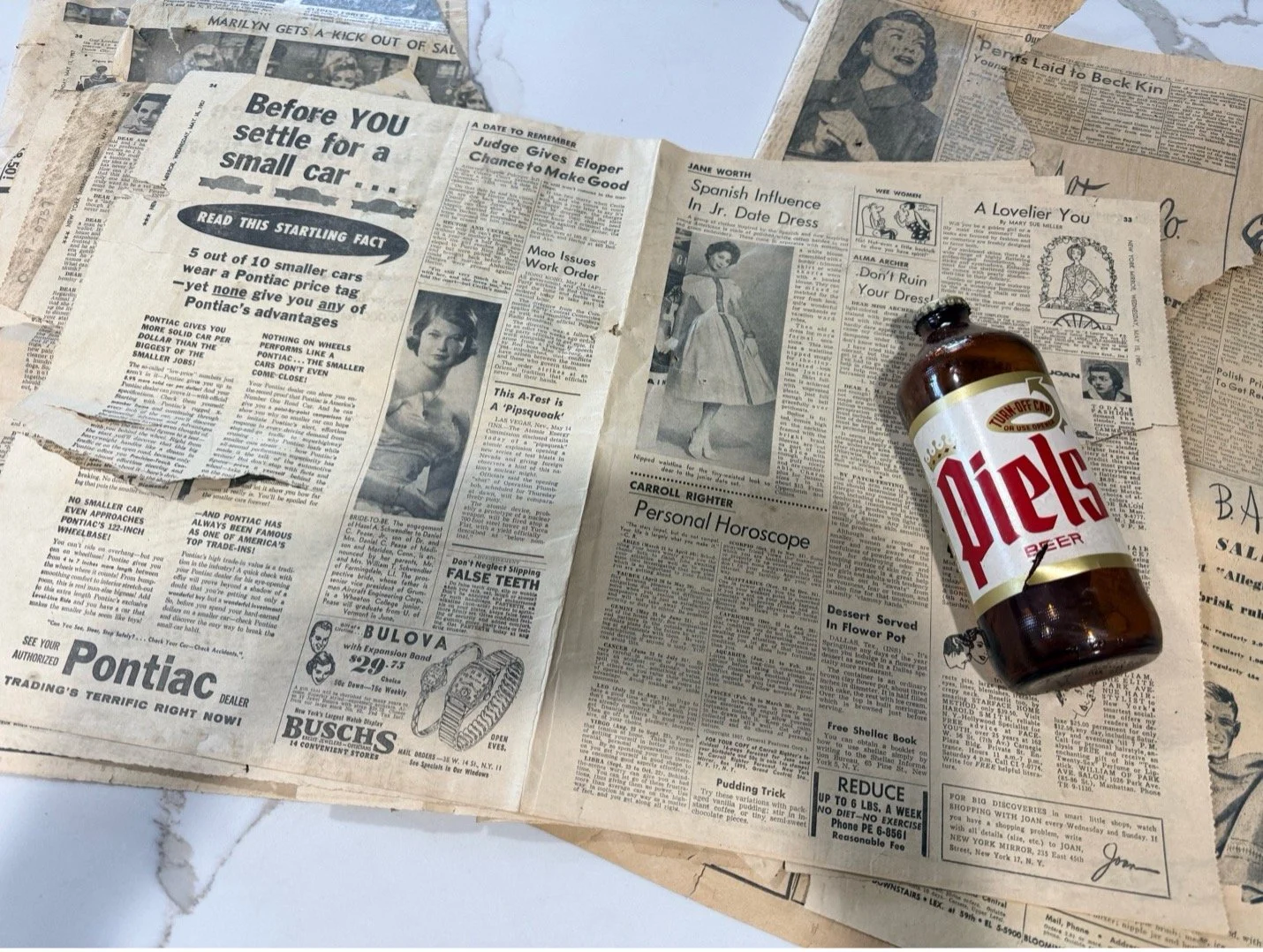
During the demolition, the construction crew called me upstairs. Tucked between the sheetrock and the studs were two unexpected artifacts: a newspaper from May of 1957 and an empty beer bottle. They handed them to me, amused. I was stunned. Sixty years sealed inside a wall, forgotten but not destroyed.
The newspaper was brittle, yellowed, torn at the edges. The beer bottle was from a brand I had never heard of. Piels. A relic from another time. I couldn’t stop looking at them.
The pages told stories that once mattered deeply. Movie listings. Advertisements for storm windows and mink stoles. Advice columns written for women navigating dating, marriage, and domestic life. Headlines about politics, wars, local tragedies, and television schedules. Prices jumped off the page: garage doors for $69.95 delivered, dresses for under $40, awnings for $19.95. Entire lives compressed into columns of ink.
What struck me most wasn’t just what was there. It was how it was consumed.
When was the last time you saw a construction crew pull out a newspaper or a book on their lunch break? Today, breaks are filled with phones. Headlines flash by in seconds. Videos autoplay. Information is endless, but focus is rare.
Back then, information was finite. You lingered because there was nowhere else to go. You read what was in front of you. And in that slowness, meaning had room to settle.
None of it was meant to last.
A newspaper read and discarded. A beer finished and forgotten. Small, ordinary pauses in the middle of a long workday.
And yet, they remained.
Time passed. Families lived in that house. Storms battered the roof. Sunlight filled the room. Children laughed, cried, and grew up. And all the while, these artifacts stayed hidden, untouched, carrying quiet witness to it all.
That’s when it hit me. Organizations are like this too.
In storage rooms and forgotten closets, you’ll find old runbooks, handwritten notes, original system diagrams, faded photos from company picnics, belongings left behind by employees who moved on or founders who are no longer there. It’s easy to label these things as clutter. Junk. Outdated. Irrelevant.
But they’re not.
They are time capsules.
They tell us what mattered. What people paid attention to. How work was done when the pace was slower and the tools were simpler. They reflect priorities, values, and assumptions we no longer even notice because they’re baked into how we operate today.
Progress doesn’t require erasing the past. Sometimes it requires pausing long enough to look at it.
I didn’t throw the newspaper or the bottle away. I don’t know exactly what to do with them yet. But I keep them. And from time to time, I take them out and look again. Each time, they tell me something new.
If those walls could talk, I wonder what else they would say. Who stood there on quiet mornings. What storms shook the roof. How much sunlight filled the room. What moments of joy and sorrow unfolded without anyone thinking they needed to be remembered.
Maybe that’s the lesson.
Not everything meaningful is intentional. Some of the most important stories are hidden in plain sight, waiting patiently for someone willing to slow down long enough to notice.
And sometimes, the walls really do remember.